Europe’s economy relies heavily on road transport. Goods move constantly between factories, warehouses, and retail centers, while trucks serve as the bloodstream of this entire system. According to Eurostat, road transport accounts for roughly a quarter of all freight transport within the European Union, carrying more than 13 billion tonnes of cargo every year.
This means that every part of the logistics chain — from the truck itself to the repair center — has a direct impact on how the broader economy functions. When a vehicle breaks down, the chain is disrupted: deliveries are delayed, manufacturing processes slow down, and transport companies face immediate financial losses.
For this reason, commercial vehicle maintenance is no longer viewed merely as a technical process. Today, it is increasingly seen as an essential part of business infrastructure.
Downtime Costs More Than the Repair Itself
In Lithuania, salaries for commercial vehicle mechanics have increased significantly in recent years. In the logistics industry, one of the most important indicators is vehicle uptime — the amount of time a truck spends on the road rather than in the workshop. Every day of downtime can mean lost revenue, additional driver-related costs, or even contractual penalties for delayed deliveries.
According to various transport industry studies, the downtime of a single truck in Europe can cost anywhere from several hundred to more than a thousand euros per day, depending on the route, cargo value, and contractual obligations involved. As a result, repair speed has become just as important as the repair cost itself.
For transport companies, the key question is no longer only how much the repair will cost, but also how long the vehicle will remain out of operation. The shorter the downtime, the lower the losses and the more stable the entire logistics chain becomes.
Repair Speed Starts in the Warehouse
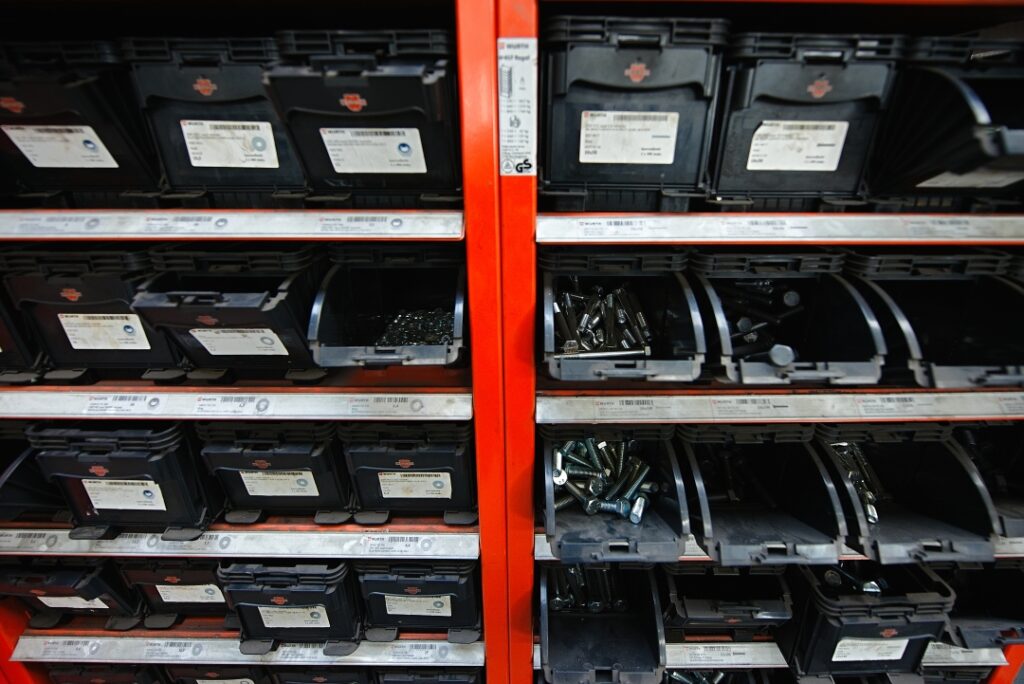
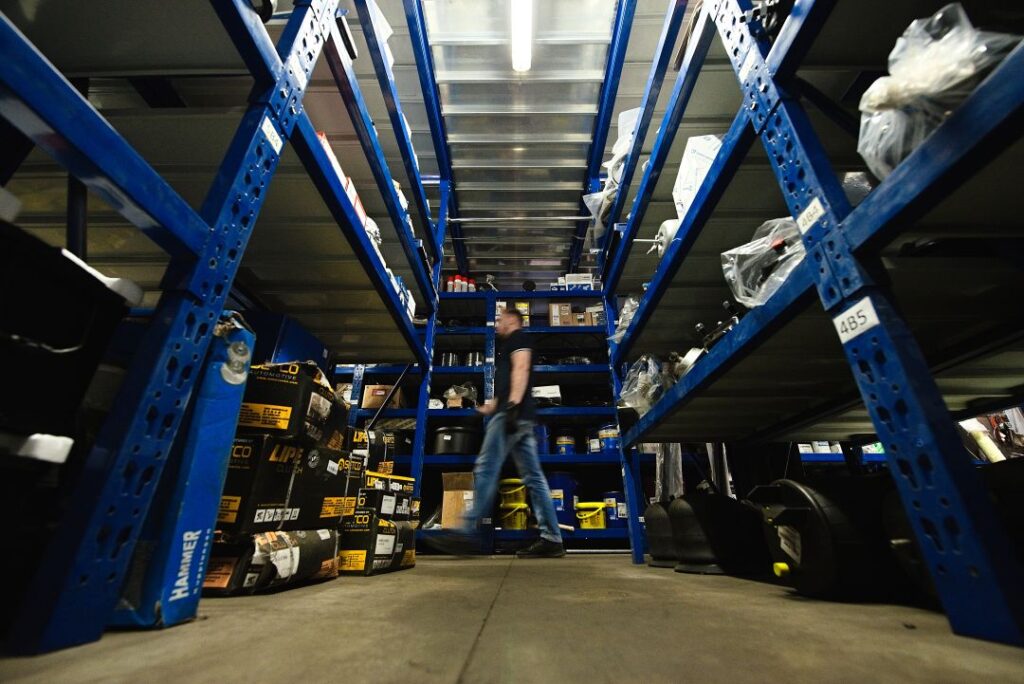
At first glance, it may seem that a repair center’s efficiency depends mainly on the number of mechanics or the size of the workshop. In practice, however, one of the most critical factors is often located elsewhere — in the warehouse.
If the necessary spare parts are already in stock, repairs can begin immediately. If not, the vehicle may remain idle for several days or even a week while parts are delivered from suppliers.
According to Karolis Giga, Purchasing and Logistics Director at the truck repair network UAB “Trelo”, a repair center’s efficiency depends heavily on process quality and inventory management.
“A repair center without clear processes and a properly structured warehouse is essentially just a workshop capable of carrying out repairs — nothing more. Repair speed primarily depends on whether the required parts are available on-site,” he says.
According to Giga, inventory planning and supply chain management are often the deciding factors in whether a repair takes only a few hours or stretches into several days.

Data Makes It Possible to Predict Failures
In recent years, commercial vehicle maintenance has become increasingly data-driven. Repair centers analyze historical breakdown data, vehicle models, seasonal trends, and statistics on frequently replaced components. This information helps predict which parts will likely be needed in the near future and ensures their availability in advance.
Giga explains that inventory planning relies on several interconnected sources of information.
“We evaluate historical failure statistics and spare part consumption, analyze vehicle fleets — including models, engine types, age, and operating intensity. Seasonality, delivery lead times, and current warehouse stock levels are also important. By combining this data, we can forecast demand more accurately and reduce shortages,” he says.
Repair center teams themselves also play an important role in the process. If a certain part is needed but unavailable at the time of repair, the information is recorded in internal systems and passed on to the purchasing team. This allows the company to react quickly and continuously improve warehouse structure and inventory planning.
Inventory planning also varies by region. According to Giga, the demand for specific parts can differ significantly between repair centers.
“In some regions, for example, Mercedes-Benz trucks dominate, while in others Volvo or other manufacturers are more common. Naturally, this changes the list of frequently used parts. If every warehouse looked identical, it would mean nobody is paying attention to the actual market — and inventory simply becomes expensive decoration sitting on shelves,” he says.
83% of Repairs Are Completed Using Parts Already in Stock
A properly structured warehouse and data-based decision-making can significantly reduce repair times. When the required parts are already available on-site, most repairs can be completed immediately.
According to Trelo’s internal data, approximately 83% of all repair jobs across its repair centers are completed as soon as the issue is diagnosed, using parts already available in stock without the need for additional supplier orders.
Giga says this result is not a coincidence, but the outcome of consistently developed operational processes.
“This is not luck or coincidence. It is the result of processes, inventory planning, and data analysis. When a warehouse is built based on real repair data, a large share of repairs can be completed immediately,” he explains.
He adds:
“In simple terms, people often assume repairs are delayed because of the mechanic. In reality, in many cases everything depends on whether the part is available in the warehouse. When inventory is planned correctly, this kind of result becomes quite logical.”
This approach allows transport companies to return vehicles to the road faster and reduce the financial impact of downtime.
Supply Chain Management Is Becoming a Competitive Advantage
In recent years, the importance of supply chains has become even more evident. The COVID-19 pandemic, geopolitical disruptions, and instability in global logistics demonstrated just how unpredictable automotive parts supply can become.
Parts that previously arrived within a few days suddenly faced delays of weeks or even months during the pandemic. As a result, many repair center networks were forced to reassess their inventory management strategies.
“For a long time, road transport repair centers relied heavily on the just-in-time model — ordering a part only when it becomes necessary. However, in the commercial vehicle segment, this model often no longer works. When a truck stops, the carrier’s main concern is not the breakdown itself, but how long they are unable to fulfill obligations to their client. In such situations, waiting several days is simply not an option. That is why warehouse strategy has become one of the key factors determining service efficiency,” says Giga.
According to him, companies today also place greater emphasis on supply risk management by increasing stock levels of critical parts and expanding networks of alternative suppliers. This helps ensure part availability even when one supply channel becomes disrupted.
These challenges have pushed repair networks toward a more proactive inventory planning model, where warehouse structures are built based on historical repair data, forecasting, and supply risk evaluation.
Fast Repairs Support the Stability of the Entire Logistics Chain
Everything in the transport sector is interconnected. The downtime of a single truck can affect not only the transport company itself, but also customers, warehouses, and manufacturing businesses.
For this reason, service efficiency is no longer just a technical issue — it has become an economic factor within the transport industry.
The faster a vehicle returns to the road, the lower the downtime-related losses and the more stable the entire logistics system becomes.
As a result, one simple principle is becoming increasingly clear in the truck repair industry: fast repairs do not begin in the workshop — they begin in the warehouse.