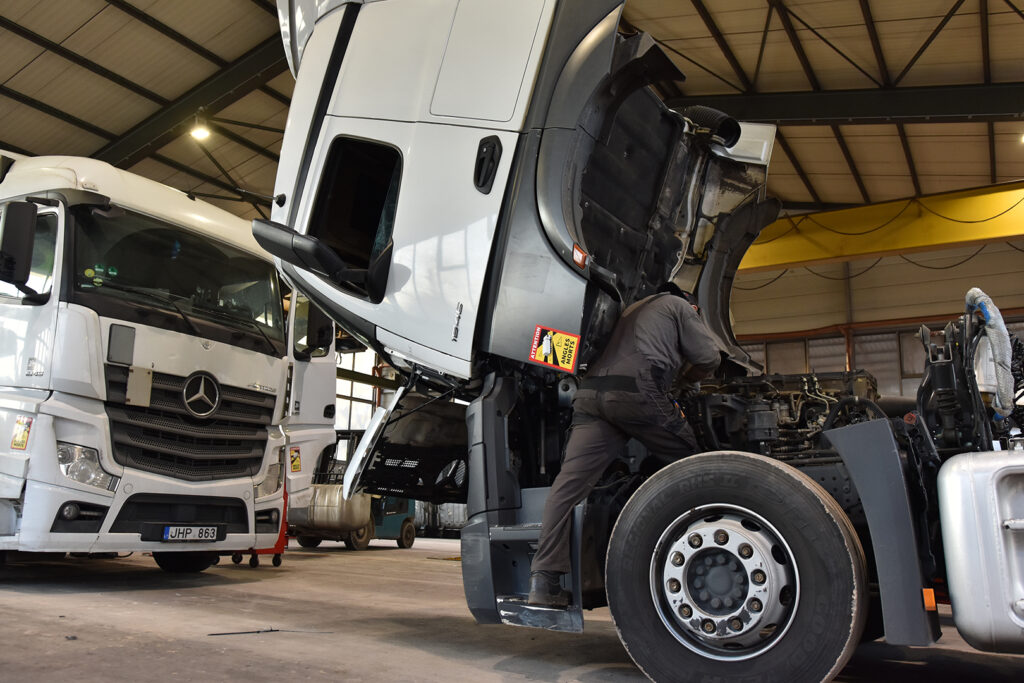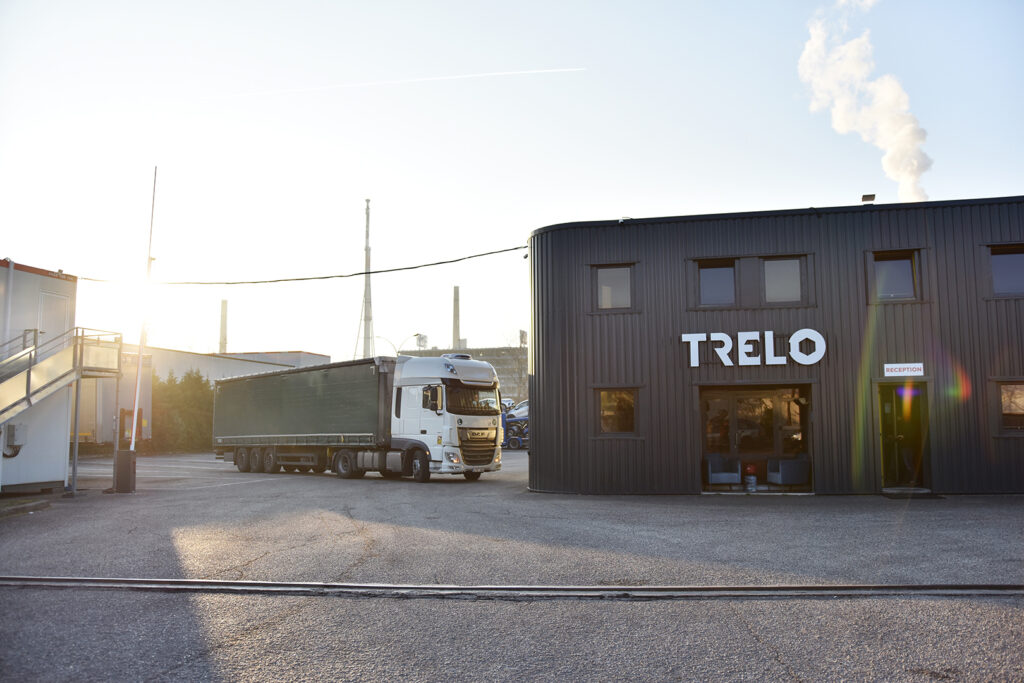
Winter is one of the most demanding periods of the year for commercial vehicles. Moisture, road salt, temperature fluctuations, and intensive use all leave their mark – often in ways that are not immediately visible. As temperatures gradually rise, many transport companies start to relax: the worst of the frost is over, the roads are dry, and the trucks keep rolling. Yet February and early spring are often the time when problems that have quietly built up over the winter begin to surface in workshops.
“Very often we hear: the truck performed perfectly even in the harshest frost, so there is no reason to look for problems. Unfortunately, this is one of the most dangerous illusions in the transport business,” says Evaldas Sparnauskas, Workshop Manager at TRELO.
Winter damage doesn’t appear overnight
Unlike sudden breakdowns, the effects of winter usually develop gradually. Moisture settles on and inside brake system components, road salt initiates corrosion processes, and temperature fluctuations weaken both rubber and metal connections. The truck continues operating, but certain components are already working under borderline conditions.
According to E. Sparnauskas, the main issue is that during winter, snow, ice, salt, and dirt constantly accumulate on and underneath the vehicle, and often remain there until temperatures rise or the vehicle is thoroughly washed.
“Due to tight delivery schedules and pressure to keep freight moving, there is often simply no time for these procedures. Salt and moisture stay under the chassis, on connections and components – and over time, they take their toll,” the expert explains.
That is why February becomes a critical period: everything may look normal on the outside, but internally, the problems are already ‘programmed.’
The most common post-winter failures
Electrical systems are usually among the first to show issues. Humid conditions and road salt accelerate corrosion, and vulnerable spots often fail at the worst possible moment.
“It is crucial to pay attention to the electrical system – connectors, wiring, sensors, and lighting units. Even the smallest crack in a headlamp lens allows moisture to get inside, which can quickly cause costly damage not only to the lamp itself but also to the wiring harness,” notes E. Sparnauskas.
Brake and compressed air systems also tend to cause problems in early spring. Cold conditions increase the likelihood of air leaks, while corrosion-affected components can lead to sticking parts or reduced braking efficiency.
“We often see cases where brake system components are already damaged, but the failure is not yet obvious. If braking performance, brake discs, spring brake chambers, or condensate drainage are not checked, the issue can escalate very quickly,” says the TRELO workshop manager.
The third sensitive area is the suspension and steering system. During winter – especially in snowy conditions – road surfaces are often in poor shape, which significantly accelerates wear of chassis and steering components.
“After winter, it is worth carefully assessing the suspension, steering systems, and tyre wear. This is directly related not only to comfort, but also to safety,” E. Sparnauskas emphasizes.

Why the upcoming spring inspection is more than a formality
European transport safety studies show that a large share of heavy-vehicle failures are linked to delayed maintenance. In other words, many issues could be detected earlier if inspections were carried out thoroughly rather than as a mere box-ticking exercise.
“A spring inspection should be seen as an opportunity to stop a chain reaction – from minor wear to a serious breakdown at the peak of the season,” says the TRELO expert, adding that in modern trucks, electronic systems are often the first to indicate that something is not working as it should.
Prevention is still cheaper than urgency
Workshop experience shows that timely spring maintenance helps avoid the most costly scenarios in summer, when every day of downtime becomes extremely expensive. Emergency repairs during peak season mean not only higher bills, but also lost time, disrupted schedules, and dissatisfied customers.
“Preventive maintenance is still the most cost-effective solution, even if it doesn’t always seem that way in the short term. In the long run, it is the only way to keep a fleet running reliably,” E. Sparnauskas stresses.
This is exactly the approach promoted by TRELO, where service centers across different European countries see every day how many failures can be prevented at an early stage.
The TRELO representative also highlights the importance of the human factor in preventive maintenance. Drivers’ awareness and their ability to notice unusual noises, vibrations, or dashboard warnings often determine whether a problem is resolved early or turns into an expensive repair.
“Most serious failures start with small signs that the driver notices first. The sooner they are reported, the higher the chances of avoiding major consequences,” the expert points out.
An investment in peace of mind and reputation
Maintenance in the transport sector should not be seen as an extra cost. It is an investment in predictable operations, driver safety, and the company’s reputation. Delayed repairs often turn out to be the most expensive ones – not only because of the repair bill, but also due to lost trust.
“The transition from winter to spring is the best time to pay closer attention to the technical condition of the vehicle. It allows you to work more calmly and safely throughout the entire season,” concludes E. Sparnauskas.