The Commercial Transport Labour Market: Growing Demand, Changing Requirements, and an Unresolved Talent Shortage
The commercial transport sector in Lithuania and across Europe has been living in a paradox for some time. On the one hand, it is a stable and strategically important segment of the economy, with demand that is not going anywhere. On the other hand, a shortage of qualified specialists is becoming increasingly evident in the labour market, turning into one of the main constraints on growth.
Logistics and road transport remain among the most critical elements of Europe’s supply chains. The growth of e-commerce, regional trade, and the dynamics of the manufacturing sector mean that truck fleets are not shrinking — on the contrary, they are modernising and expanding. As a result, the need for maintenance and repair services is also increasing.
Wages Are Rising, but the Shortage Remains
In Lithuania, salaries for commercial vehicle mechanics have increased significantly in recent years. Depending on experience and competencies, truck mechanics can earn approximately €1,200 to €2,500 net per month, while highly skilled specialists can earn even more. Auto electricians working with advanced diagnostic systems and complex electronics often command even higher pay ranges.
In Western Europe, the differences are even more pronounced. In Germany or Scandinavian countries, annual salaries for truck mechanics can reach €45,000–€60,000 gross, while shortage occupations are often offered relocation packages, accommodation, or travel compensation.
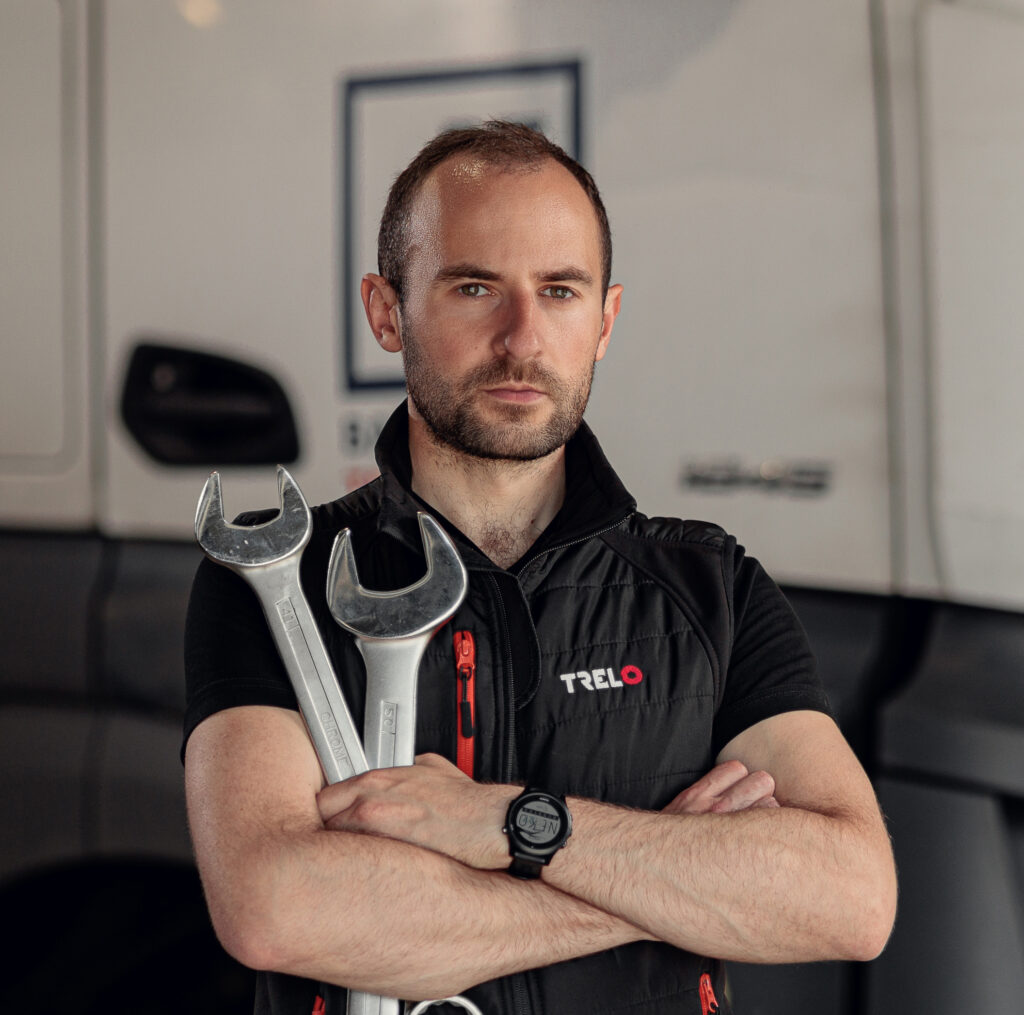
However, as Paulius Stravinskas, Head of HR and Communications at the truck repair network TRELO, notes, salary is no longer the only competitive factor.
“The issue today is often not how much to pay, but whom to pay. The market lacks qualified mechanics and auto electricians — especially those who can work with next-generation vehicles and their electronic systems.”
According to him, a portion of experienced specialists is approaching retirement age, while the number of young people choosing these professions is not yet sufficient to compensate for the natural outflow from the market.
Demographics and Vocational Training Challenges
Eurostat data shows that a large share of the EU transport workforce is older: around 37.7% of employees are aged 50–64, while only about 12.7% are younger workers. This means that a significant part of the workforce will retire in the coming years. Although engineering and transport maintenance professions are among those with long-term demand, attracting young specialists remains one of the biggest challenges.
According to P. Stravinskas, this is directly reflected in recruitment efforts:
“Young people often do not choose technical professions — which means companies are competing not only on salaries, but also for the limited number of qualified specialists in the market.”
In Lithuania, the situation is further complicated by emigration. Highly qualified mechanics and auto electricians are mobile — they can relatively easily find jobs in Western Europe, where compensation is higher. This means local companies must compete not only with each other, but also with employers abroad.
At the same time, commercial vehicle maintenance is becoming increasingly complex. Hybrid systems, advanced safety technologies, telematics, and diagnostic software require not only mechanical skills but also analytical capabilities. Vocational training systems are struggling to keep pace with the speed of technological change demanded by the market.
The Profession Is Transforming: From Tools to Diagnostics
A modern truck is no longer just a set of mechanical components — it is a complex system of electronics, sensors, and software. This is fundamentally changing the nature of the profession.
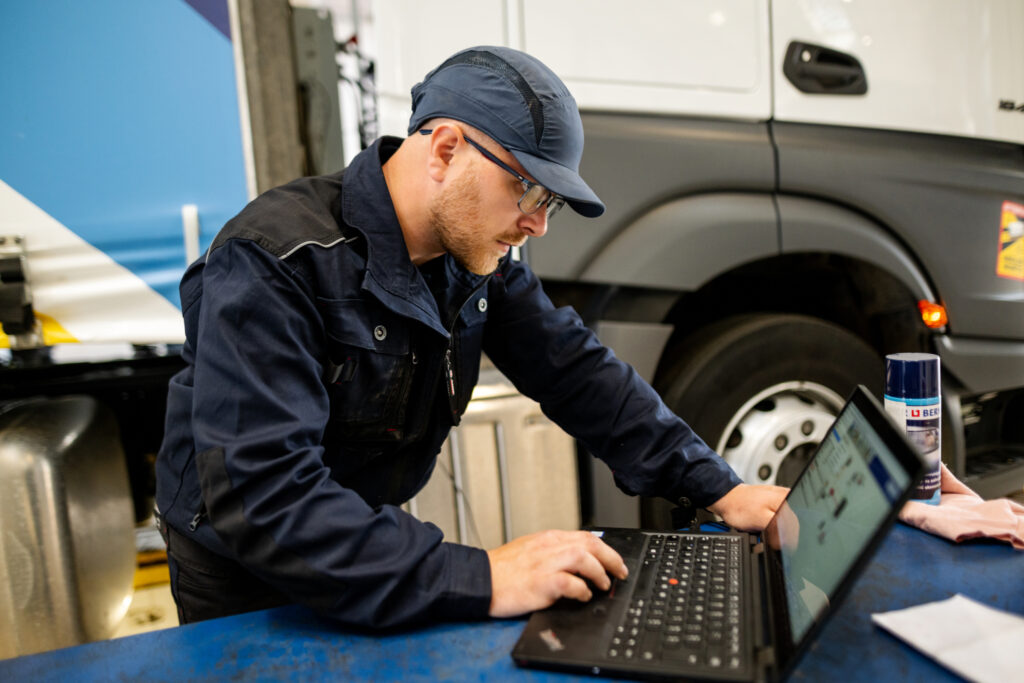
“Today, a mechanic is increasingly working with a computer in hand. Diagnostics, software updates, and electronic fault analysis are becoming everyday tasks. We are no longer talking only about physical work, but also about analytical thinking,” emphasises P. Stravinskas.
The role of auto electricians is becoming even more critical in this transformation. The growing importance of telematics, safety systems, and driver assistance technologies means that without highly qualified specialists, operating truck fleets becomes more complex and costly.
Minor mistakes that turn into real problems
Discussions about the future often raise the topic of automation. Autonomous trucks, remote diagnostics, and AI-driven maintenance algorithms are no longer just theoretical concepts.
However, in practice, automation is changing the nature of work rather than eliminating the profession.
“Automation may reduce some routine tasks, but it raises the qualification bar. We need people who understand systems, can analyse data, and make decisions. The more complex the technology, the greater the value of competent specialists,” says P. Stravinskas.
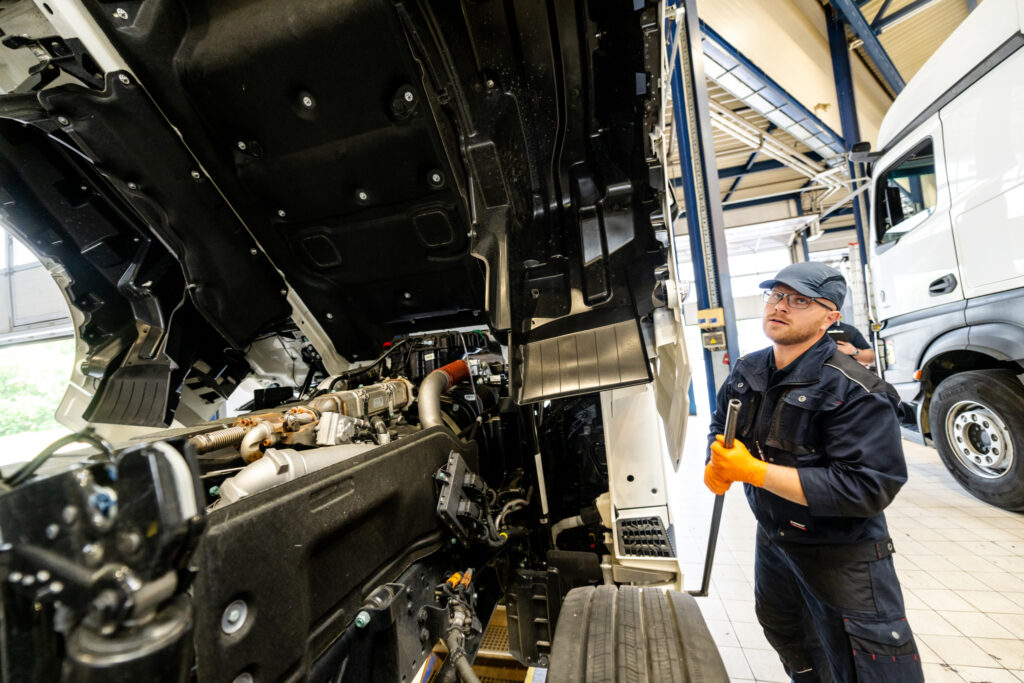
Even the most advanced vehicles still require physical maintenance, component replacement, fault analysis, and system calibration. As the share of electronics in trucks continues to grow, the importance of auto electricians is only increasing.
This means that in the future, those who will remain competitive are the specialists who continuously learn and adapt to technological change.
Long-Term Outlook: Growth Under Pressure
Looking at the broader European context, the commercial transport sector continues to grow. The expansion of e-commerce, regional trade, geopolitical shifts, and the reorganisation of supply chains ensure that road transport will remain one of the key logistics segments in the coming years.
This means that demand for mechanics and auto electricians will not decrease. On the contrary, as fleets become more complex and technologically advanced, the importance of qualified specialists will only grow.
The labour market in this field is becoming increasingly clear: this is not a declining profession, but an increasingly complex one. And the higher the technological bar, the greater the value of human competence. Those who can adapt to technological change will not only have stable employment, but also real opportunities to earn competitive salaries both in Lithuania and across Europe.
Since 2010, TRELO has been offering its customers truck and trailer repair services and providing technical assistance to carriers on the road. Our range of services is extremely wide: computer diagnostics, wheel geometry adjustment, tire installation and balancing, complete vehicle preparation for technical inspection. Trelo specialists are ready to eliminate all breakdowns for tractors and trailers of various manufacturers both in their repair centers and on the road.
Honesty and reliability - job list and prices are provided before repairs begin
Repair centers in convenient locations for carriers
Repair work for trucks and trailers of all manufacturers
Short repair time because we have a large stock of parts in our warehouse